

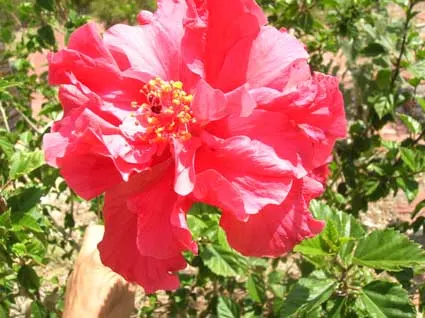
Hibiscus
Folk names: Kharkady , Japa
| Family | Malvaceae |
|---|---|
| Genus | Hibiscus |
| Species | rosa - sinensis |
| Part(s) used | Flowers, the leaves and roots can also be used . The information on this page relates to the flowers. |
Abortive, alterative, antoxidant, anti-inlammatory, antimicrobial, antispasmodic, demulcent, diuretic, emollient, emmenagogue, febrifuge, hemostatic, mild laxative, Refrigerant (what these mean)
Uses
Indications for Hibiscus -Cough, cystitis, dysmennorhea, menorrhagia, painful urination, toxins in the blood, veneral diseases. Hibiscus is very yin and useful for balancing the feminine. It is very useful for reducing hot flushes in menopauseand can be used in drinks in summer to aid in colling the body down. It can be used in syrups for coughs, colds, sore throats and for supporting the immune system. The flowers can be used to promote laxation, for UTI's, and certain veneral diseases especially where there is inflammation and discharge. The flowers are used in creams and lotions to improve skin health and for hot conditions like eczema, dermatitis and psoriasis .
Majikal uses
The flowers of Red Hibiscus are brewed to induce lust. The blossoms are used in love incences and love sachets. The flowers are placed in wreaths for marriage ceremonies in the tropics.
Constituents
Flavonoids- quercetin,kaempferol, anthocyanins, organic acids- malic, citric, hibiscus, vitamin C, minerals, essential oil, small amounts of alkaloids, tannins, Sterols, lipids, polysaccharides, riboflavin, thiamine, apigenidine, oxalic acid, niacin, pelargonidine.