

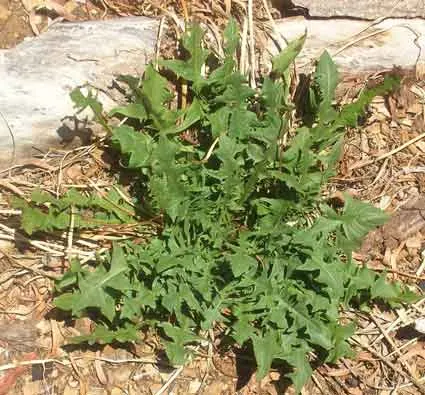
Dandelion
Folk names: Fairy clock, Lions teeth/tooth, Blowball, Cankerwort, Piss a’bed, Priest’s crown, Puff ball, Swine snout, White endive, Wild endive.
| Family | Compositae / Asteraceae |
|---|---|
| Genus | Taraxacum |
| Species | officinale |
| Part(s) used | Leaf and Root |
Aperient , Anti-rheumatic, cholagogue, depurative, diuretic, hepatic, laxative, stomachic , (bitter) tonic. (what these mean)
Uses
The name Dandelion comes from the French Name Dent de Lion (Lions Teeth). The root can be roasted and used as a coffee substitute. Dandelion is a powerful diuretic, it is so good for cleaning the kidneys, but unfortunately potassium is lost generally with frequent urination. So here we can see Nature’s balancing actions by providing a good source of potassium in the leaves. This factor also makes it excellent to use in cases of water retention due to heart problems. It can be used as a bitter tonic for atonic dyspepsia and also as a mild laxative in constipation (not chronic). It combines well with Licorice which can cause potassium loss if used in excess . The bitter principle also promotes appetite and improves digestion. The root stimulates the liver and gall bladder, increasing the flow of bile. It is also useful in any inflammation or congestion of both these organs. It can be used for gallstones , jaundice, gout, eczema and cirrhosis . It has been used for the treatment of joint inflammation as its diuretic properties help take the lactic acid out of the system. One study has shown that Dandelion inhibits the growth of vaginal thrush. The sap can be used on warts.
Constituents
Taraxacin, bitter principle, dioxycinnamic acid, flavoxanthin, citric acid, phenylaxacetic acid, riboflavin, sitosterol, sitosterin, stigmasterol, coumestrol, vitamins A, B, C and D (more vitamin A than carrots), triterpenes (taraxol, taraxasterol, taraxerol), inulin, sugars, pectin, glycosides, choline, phenolic acid, asparagine, potassium, iron, lutein, violaxanthin, carotenoids. Sesquiterpene lactones; taraxacoside, tarainic acid, dihydrotaraxinic acid and taraxacolide glycosides. Polyphenolic caffeoyltartaric acids.