

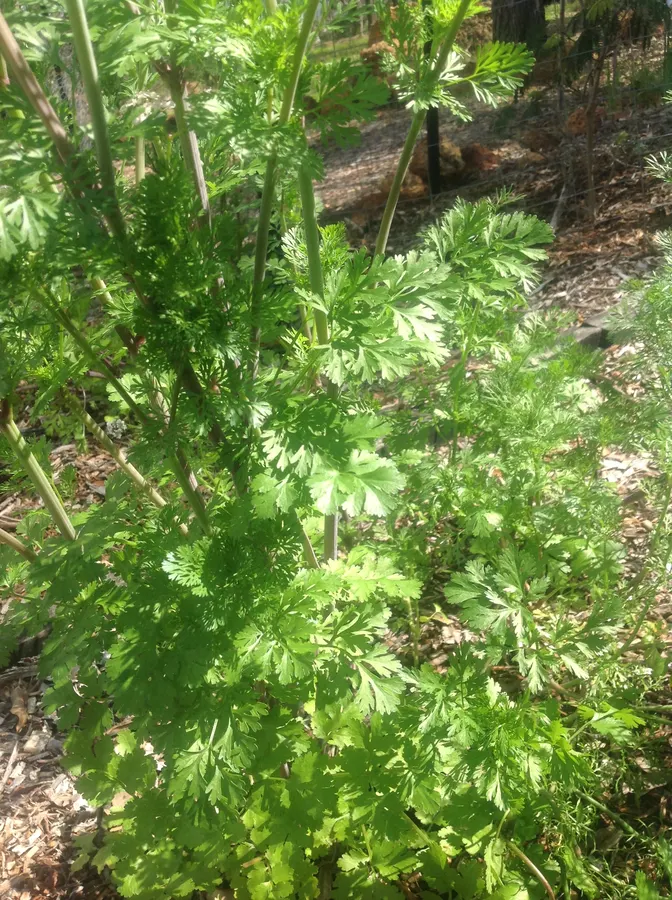
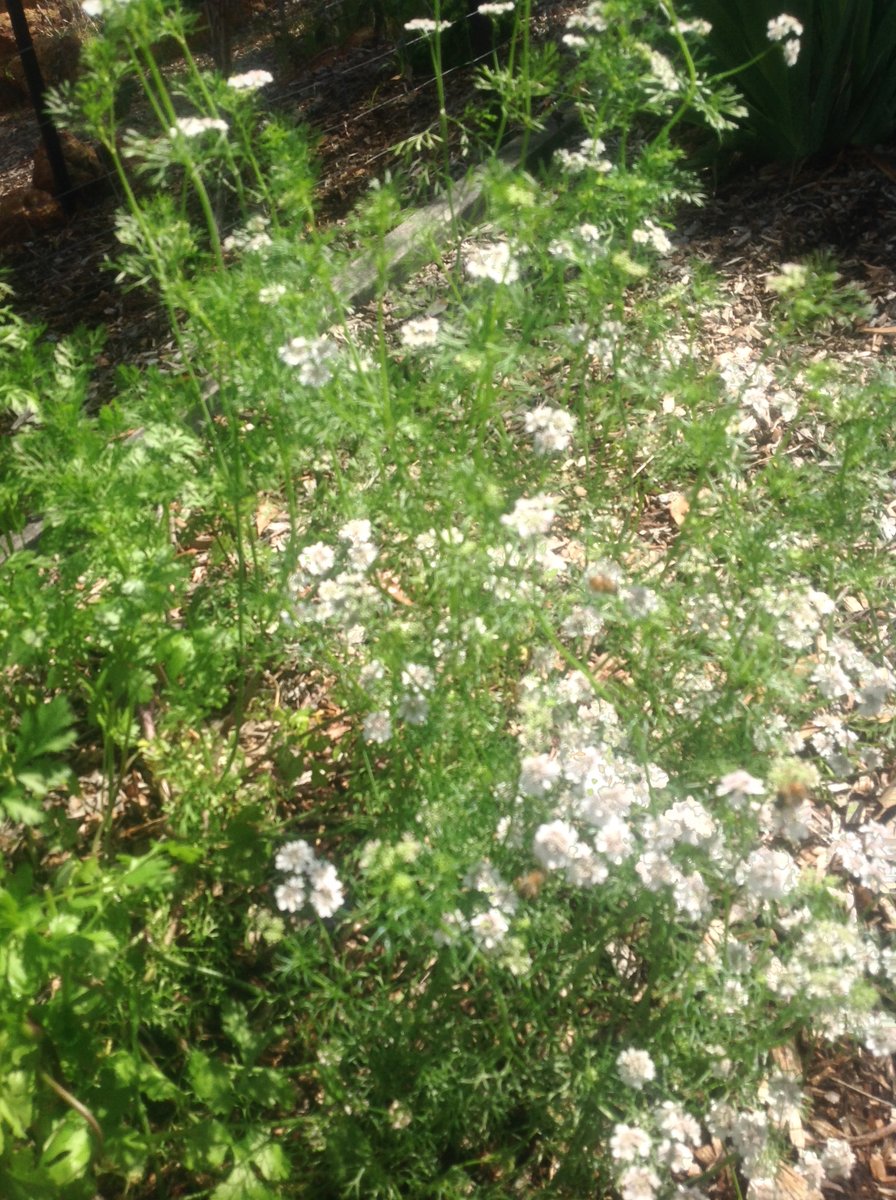
Coriander
Folk names: Cilantro, Chinese Parsley, Dhania
| Family | Umbelliferae / Apiaceae |
|---|---|
| Genus | Coriandrum |
| Species | sativum |
| Part(s) used | Leaf , seed , root. |
Antibacterial, Anti fertility, Antihyperglycemic, Antihyperlipidmic, Antioxidant, Anti-proliferative, , Antispasmodic, Appetiser, Aromatic, Carminative, Digestive stimulant , Diuretic, Hypotensive, Refrigerant, Stimulant, Stomachic . (what these mean)
Uses
This herbs is excellent for chelating heavy metals out of the body. Eaten with food or on it's own it aids digestion. It is also used to help regulate thyroid function . NB. contains a compound which is a MAO - A inhibitor therefore should not be used by anyone taking SSRI's or antidepressants.
Majikal uses
It is used for Love, Health and Healing. The Leaf is used in Love sachets. The powdered seeds are infused in warm wine to make a love potion. The seeds are carried to ease headaches. Eating coriander when pregnant will enhance your child's intelligence.
Constituents
2.13 gm of Protein / 100gms, Vitamins- A, B1, B2, B3, B5, B6, C,E,K . Minerals- Calcium, Iron, Mahesium, Manganese, Phosphorus, Potasium, Sodium, Zinc Fatty oil, coumarins, Flavonoids, Malic acid, Phthalides, Phenolic acids, Psoralen,Tannins, Volatile oil . The volatile oil contains carvone, geraniol, limonene, borneol, camphor, elemol, and linalool. The Flavonoids include quercitin, kaempferol, rhamnetin, and epigenin. Coridander also contains active phenolic acid compounds, including caffeic and chlorogenic acid.